Drivers often go years between major repairs, especially if they have a newer vehicle. That means they might not have anyone on speed dial when they get a flat tire or notice their brakes squeaking. Instead, they head to Google.
Search engine optimization (SEO) increases the chances that your auto shop shows up in their search results. It focuses on helping search algorithms understand what you do and where you are, so they're more likely to recommend your business to nearby customers.
Auto repair shop SEO can involve everything from claiming your Google Business Profile (GBP) to using keywords like "brake repair Santa Fe." You don't have to try everything at once, but consider focusing on some of these areas.
Why Local Search Is the New Curb Appeal for Modern Mechanics
A nice sign and a few flowerbeds used to be enough to catch the eye of passersby. These days, though, many people search online instead of driving around looking for a mechanic. They might even be looking for shops from the roadside.
A
2026 survey found that 84% of consumers searched for a local business in the last three months, and 72% looked at three or fewer businesses before choosing one.
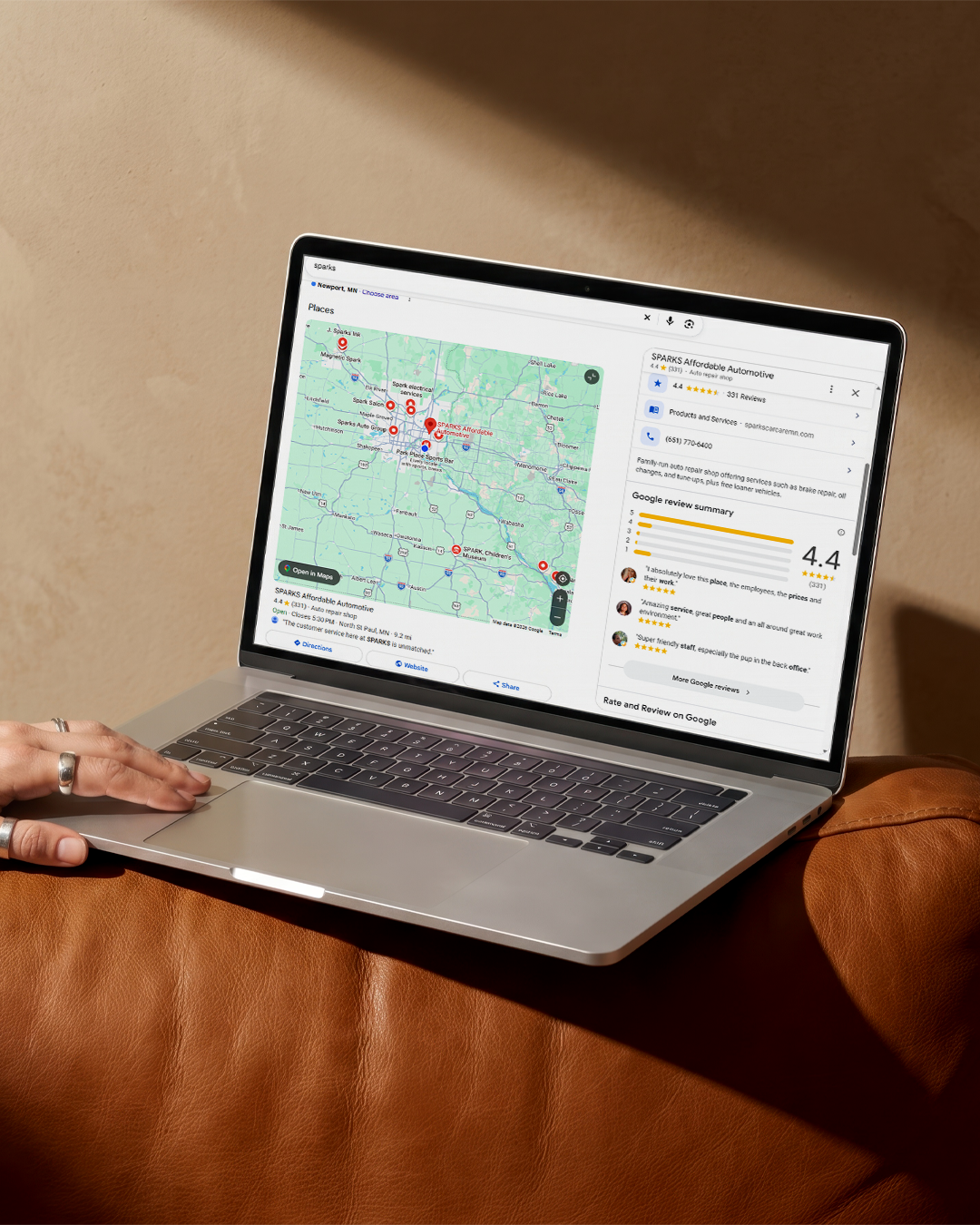
Your auto shop can appear in search engine results pages (SERPs) in a few ways. Organic search results are unpaid listings, such as your business website or social media profiles. Your company could also appear in the Map Pack at the top of the page, which spotlights three local businesses chosen by Google.
The
search engine considers several factors when ranking businesses, including:
- Proximity: How close your auto shop is to the user's location
- Relevance: Whether your shop offers the service they need
- Prominence:
The strength of your business's local reputation
While there's no way to guarantee Google will rank your auto shop, improving all three areas may help you rank higher in local search results.
Mastering Your Google Business Profile To Win the Local Map Pack
Setting up a
Google Business Profile (GBP) is an easy way to connect with local customers. It's a free listing that may appear when people search for nearby auto repair services. Essentially, it's your online business card.
An effective Google Business Profile for mechanics usually includes:
- Accurate business categories:
Google lets you choose a primary category, such as "Mechanic" or "Auto Repair Shop." Pick the one that best describes your main business. You can also add secondary categories, like "Tire Repair Shop," to help people understand what you offer.
- High-quality shop photos:
Professional photos show that your shop is a legitimate business. Add pictures of your building, team, waiting room, and service bays.
- Authentic customer reviews:
A
Yelp and YouGov survey found that 88% of review readers are more likely to trust written reviews than star ratings. When potential customers can read about other people's first-hand experiences with your auto shop, it might give them the confidence to book.
Our
auto repair Google My Business guide offers practical tips for building a winning profile.
Building Service Pages That Turn Searchers Into Customers
Local SEO for auto repair shops is all about being specific and helpful to people in your area.
Many auto shops only have a single Services page with a generic list of repairs. However, brief mentions often aren't enough to target specific searches effectively. That means you have less chance of ranking when people search for service-specific keywords like "flat tire fix in Joplin."
Instead, create individual pages for each high-margin job. For example, you might design one page for transmission repair and another for brake services.
Each page should include:
- Relevant local keywords, such as "brake repair in Gatlinburg"
- A description of the service
- High-quality photos
- An FAQs section covering common questions
- A call-to-action (CTA) button that links to your appointment scheduler
This information will help search algorithms understand what you offer. If your engine repair page includes the keyword "engine rattling at idle," it might appear if a customer searches for something similar. Plus, Google might excerpt some of your FAQs for AI Overviews, so your auto shop appears more often.
Individual service pages also give visitors the information they need to book a repair. For instance, if someone wonders how long a tire rotation will take, that page's FAQs can help them plan ahead.
Reputation Management: Fueling Your Rankings With 5-Star Reviews
Reviews are one factor that search algorithms use to measure your auto shop's prominence. Encourage your customers to leave feedback by sending an email or text after each visit. You can also display a QR code that links to your Google Reviews and Yelp pages near the checkout counter.
Set aside time to respond to reviews quickly, whether they're 5 stars or more critical. For example, if someone praises one of your mechanics, you might write, "We're so glad Quentin was able to diagnose your engine problem, Kathy! Thanks for coming in."
Even short acknowledgments show that your auto shop cares about feedback and customer service. That can build trust with potential clients before they even schedule an appointment. A
2026 Consumer Affairs survey
found that 97% of Americans read reviews before making a major purchase, and one in three won't buy a service without reading reviews first.
Responding to reviews may help SEO by showing that your business is active and responsive. However, Google hasn't confirmed it as a ranking factor.
Citations And Local Backlinks: Building Your Shop’s Authority
Google isn't the only place that customers look for nearby businesses. Cast a wide net by also listing your auto repair shop in local and industry-specific directories. These could include everything from your city's chamber of commerce to CARFAX.
Local citations for auto shops can improve SEO by helping search engines double-check your business's information. Just be sure to keep your name, address, and phone number (NAP) the same across every site. NAP consistency makes it easier for algorithms (and humans) to find your contact details.
Look for opportunities to earn local backlinks, too. You might pitch a story about one of your community events to a news outlet or ask a collaborator to link to your website. These links can build your authority beyond your website and help improve rankings.
Optimizing Your Website For Speed And Mobile Performance
It's natural to focus on your website's content, but the technical details also matter for SEO. After all, search engines want their users to have a good experience, not just find the right information.
Focus on these areas:
- Page load speed:
Customers won't stick around for 15 seconds while a sluggish site loads, especially if they're on mobile. Simple tips like compressing images will help your site load faster.
- Include clear CTA buttons:
Visitors shouldn't have to scour your website to figure out how to schedule an oil change. Keep it simple by including a large "Book now" button on every service page.
- Add automotive schema markup:
Don't leave it up to search algorithms to interpret your site. Structured data helps Google understand your business and available services. For instance, you might add schema for pricing details, customer reviews, and service categories.
Creating A Sustainable Growth Strategy For Your Repair Shop
Search engines use complex (and often mysterious) formulas to decide which businesses to rank. That's why no single SEO strategy works best for auto repair shops. To climb the SERPs, you need to experiment with multiple tactics.
Let Optimize Digital Marketing handle the heavy lifting. Our
automotive SEO services cover everything from GBPs to reputation management and technical SEO. We'll help you understand what works for your area and take concrete steps to improve your rankings.
Contact us to learn how we can help you grow your online presence and reach more customers.